A Step-by-Step Guide for Calm, Confident Dogs
Crate training is one of the most misunderstood parts of raising a puppy.
Some people worry it’s cruel.
Others use it inconsistently.
Many give up too soon.
But when done correctly, crate training:
• Builds independence
• Supports potty training
• Reduces anxiety
• Prevents destructive behavior
• Creates a safe space for your dog
The key is introducing it properly.
Let’s walk through it step by step.
Why Crate Training Works
Dogs naturally seek small, den-like spaces.
A properly introduced crate becomes:
• A calm resting place
• A predictable routine anchor
• A management tool during training
If your puppy is still struggling with potty accidents, crate structure can accelerate learning. (See: Puppy Potty Training Schedule)
Crates are tools — not punishment.
When to Start Crate Training
You can begin:
The first day your puppy comes home.
The earlier you build positive associations, the easier it becomes.
If you’re still setting up your home and routine, review: New Puppy Owner Checklist
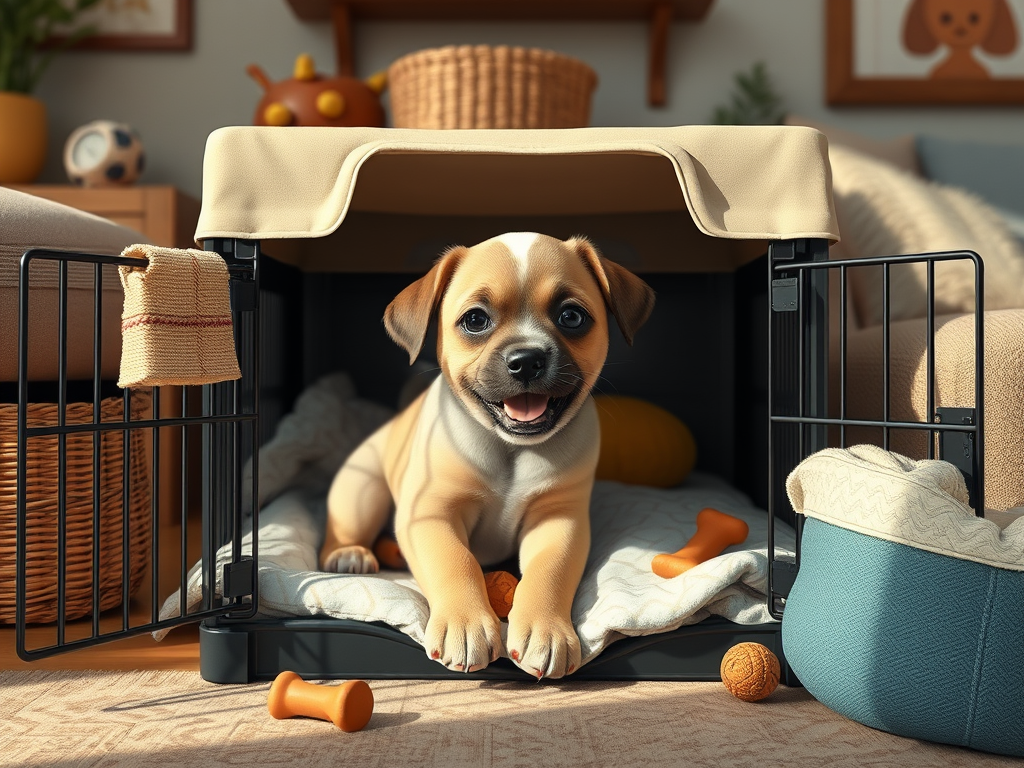
Step 1: Choose the Right Crate
The crate should be:
• Large enough to stand and turn around
• Not so large that one side becomes a bathroom
Use a divider if needed.
Too much space slows potty training.
Step 2: Introduce the Crate Positively
Never force your puppy inside.
Instead:
- Leave the door open.
- Toss a treat inside.
- Allow them to explore freely.
- Reward calm entry.
Keep sessions short and relaxed.
Step 3: Feed Meals Inside the Crate
Place food near the entrance at first.
Gradually move the bowl farther inside.
This builds positive association quickly.
Step 4: Start With Short Periods
Close the door for:
5 minutes
10 minutes
15 minutes
Stay nearby at first.
Gradually increase duration.
Consistency is more important than speed.
If your puppy becomes overly excited before entering the crate, you may need to strengthen impulse control first. (See: How to Stop Puppy Biting and Nipping)
Step 5: Use the Crate for Nap Times
Puppies need structured rest.
Overtired puppies become:
• Bitey
• Hyper
• Destructive
If hyper behavior is common in your home, structured downtime helps significantly. (Related: How to Calm a Hyper Dog Naturally)
Crate Training and Potty Training
Crates help with house training because:
Dogs instinctively avoid soiling their sleeping space.
But remember:
Crates support potty training — they don’t replace schedules.
Follow a structured bathroom routine. (See: Puppy Potty Training Schedule)
Common Crate Training Mistakes
❌ Using the Crate as Punishment
This destroys trust.
❌ Letting the Puppy Cry for Long Periods
Short adjustment whining is normal.
Extended distress needs gradual conditioning.
❌ Inconsistent Use
Structure builds results.
If you’re noticing overall training inconsistencies, review: 10 Common Dog Training Mistakes
How Long Should a Puppy Stay in a Crate?
General guideline:
Age in months = maximum hours (up to about 4–5 hours).
Example:
3-month-old puppy = about 3 hours max.
Over-crating creates frustration.
Balance is key.
Stay Organized With Your Puppy’s Routine
Crate training works best when feeding, potty breaks, naps, and playtime follow a predictable rhythm.
Our free New Pet Success Planner includes:
✔ Daily routine trackers
✔ Feeding schedules
✔ Potty logs
✔ Training trackers
✔ Vet visit records
When your schedule is organized, crate training becomes much easier.
Want a Complete Step-by-Step Training Framework?
If you’d like deeper guidance on obedience foundations, calm leadership, and preventing behavior problems early, this free dog training workshop walks through professional at-home training methods in a beginner-friendly format.
It’s especially helpful for new puppy owners building structure from day one.
Final Thoughts
Crate training isn’t about confinement.
It’s about:
Safety
Structure
Consistency
When introduced properly, most puppies adjust quickly and learn to love their crate.
Stay calm.
Go slowly.
Be consistent.
You’re building long-term habits that create a calm, confident dog.